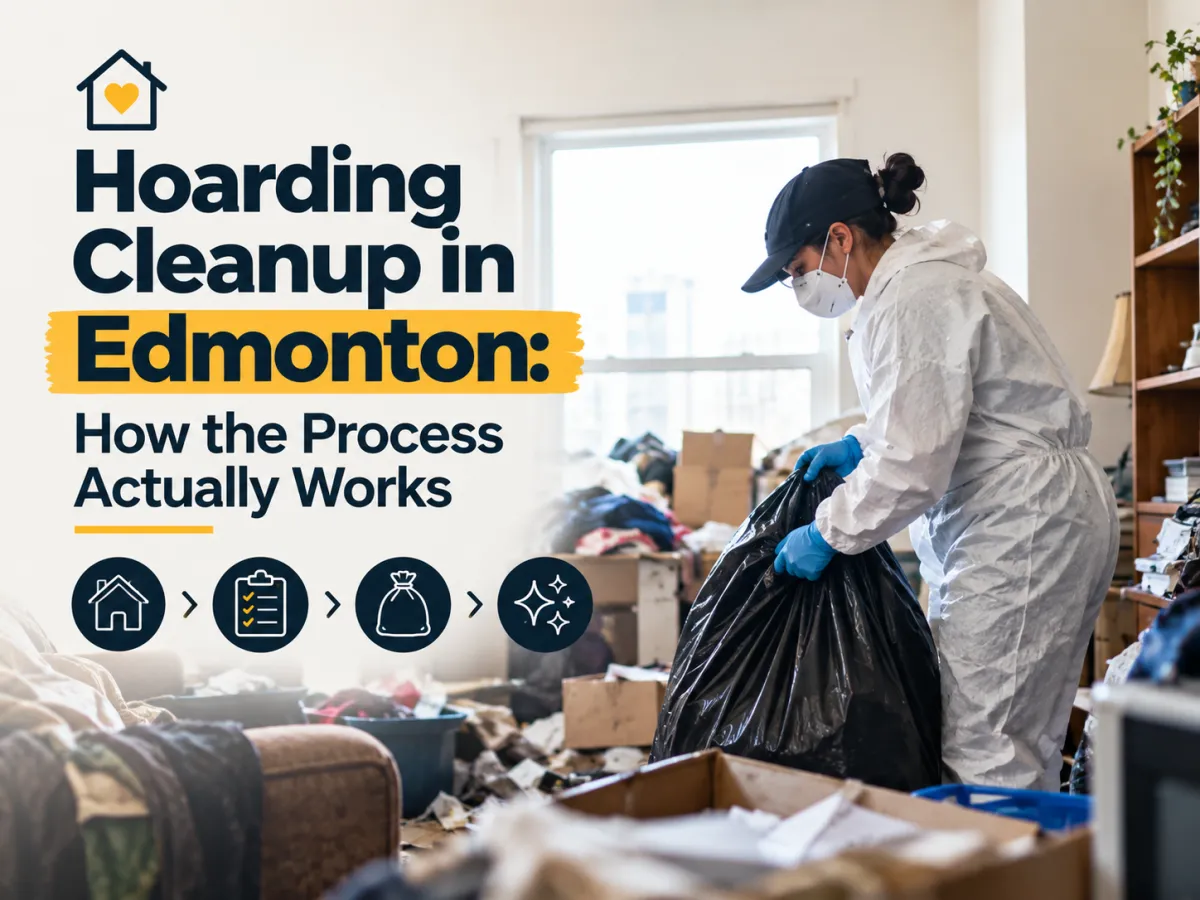
Hoarding Cleanup Edmonton: How the Process Works
A hoarding cleanup runs in five stages: assessment, a written plan with the right protective equipment, sorting, removal and disposal, then cleaning and any restoration the suite needs. A heavily loaded unit usually takes days rather than hours and several truck loads, and the sorting stage is what makes it work or fail.
There's a legal layer too, and it comes first. In Alberta, hoarding may be treated as a disability, which changes what a landlord can do about it. This guide covers both: the obligations before a crew is booked, and what actually happens on site. For contaminated units, biohazard waste removal handles the parts a standard crew shouldn't touch.
What do Alberta landlords have to consider before a cleanup?
That the tenant may have a protected disability. Under the Alberta Human Rights Act, a landlord cannot discriminate based on mental disability, and as the Centre for Public Legal Education explains, hoarding may be considered a disability requiring accommodation.
The Alberta Human Rights Commission sets out the duty to accommodate in housing: landlords must accommodate a need connected to a protected ground up to the point of undue hardship. In a hoarding situation, reasonable accommodation can include allowing more accumulation than the lease would normally permit, working with the tenant over time to reduce genuine health and safety risks, and, where other efforts fail, providing extra storage.
Eviction is still an option once accommodation has been tried and hasn't worked. A substantial breach can be addressed with a 14-day notice, and an application to the Residential Tenancy Dispute Resolution Service or the court if the tenant doesn't leave. Because the human rights analysis is fact-specific, speak to a lawyer before starting that route rather than after.
Where health and safety enforcement fits
Alberta's Minimum Housing and Health Standards are enforced by Alberta Health Services environmental public health, and a unit with blocked exits, pest infestation or sanitation problems can draw an inspection. That's a reason to act early and cooperatively, not a reason to clear a suite without notice.
Stage 1: assessment
Someone walks the unit and documents what's actually there. A good assessment records the clutter level room by room, whether exits and heat sources are blocked, signs of pests, moisture or mould, whether there are pets or animals, and whether sharps or biological waste are present.
It also checks the structure. Deep accumulation is heavy, and floors, stairs and landings need to be safe before crews carry loads across them. The assessment sets crew size, protective equipment, the number of bins and the realistic timeline, and it establishes the before-condition photos you'll want later.
Stage 2: the plan, protective equipment and containment
Before anyone touches anything, the plan should cover access and parking, where bins go, the route material takes out of the building, and how other tenants are affected. Buildings with one elevator need scheduling that doesn't trap everyone else.
Protective equipment scales with what the assessment found: gloves, coveralls, eye protection, respiratory protection and puncture-resistant gloves where sharps are possible. Containment keeps dust, odour and pests inside the unit rather than moving them down the hallway.
Stage 3: sorting, with the tenant if possible
This is the stage that separates a cleanup that lasts from one that undoes itself. If the tenant still lives there, sorting is led by them, at a pace that works, with the crew doing the lifting rather than the deciding.
Set categories before starting: keep, donate, recycle, dispose, and a review pile for anything uncertain.
Pull documents, identification, photographs, medications and anything that looks financial or sentimental into a separate, protected box.
Work room by room and finish each one, so progress is visible.
Clear exits, hallways and the area around heat sources first, since those are the actual safety risks.
Photograph as you go, so there's a record of what left the unit.
Respect matters here beyond basic decency. A cleanup that a tenant experiences as a raid tends to be followed by rapid re-accumulation, and it can undermine a landlord's position if a human rights complaint follows.
Stage 4: hazards, removal and disposal
Standard crews handle furniture, garbage and general clutter. Some things need specialists:
Needles and other sharps, which need puncture-proof containers and proper handling.
Human or animal waste, rodent droppings and urine-soaked materials.
Heavy mould from long-term moisture.
Anything suggesting an unattended death or trauma.
Propane cylinders, chemicals, solvents and other hazardous items, which need hazardous waste disposal rather than a bin.
Disposal needs records. Keep tipping receipts and a manifest of what went where, both for the building's own file and for any later dispute about cost. If the tenancy has ended and belongings were left behind, Alberta's abandoned goods rules apply, so document value before anything is thrown out and follow the process an eviction cleanout should already be built around.
Stage 5: cleaning, odour and restoration
Once the unit is empty enough to see the floor, cleaning starts: full sanitation of hard surfaces, kitchens and bathrooms, then odour treatment. Odour lives in soft materials, so carpet and underlay often have to go, and sealing subfloors or repainting may be needed after that.
Then the assessment of what's underneath. Long-term accumulation hides water damage, failed flooring, pest damage and appliances that stopped working years ago. A suite clean-up with before-and-after photos gives you a clear record of the condition the unit was returned to, and tells you what repairs the turnover actually needs.
Who else should be involved
Hoarding situations rarely resolve with one clean. Where a tenant is willing, connecting them with support services, a family member or their physician does more for the next twelve months than the crew does in a week. Pest control, Alberta Health Services environmental public health and, where animals are involved, the humane society each have a role. A landlord who coordinates rather than dictates also builds the record that shows accommodation was genuinely attempted.
What drives the cost and timeline?
Volume is only part of it. The bigger cost drivers are access and contamination:
How much material there is, measured in truck or bin loads rather than square feet.
Access: a third-floor walk-up with a narrow stairwell costs far more in labour than a ground-floor suite with a door to the parking lot.
Contamination: sharps, biological waste or heavy mould change the crew, the equipment and the disposal route.
Whether sorting is required or the unit is being cleared outright.
Pest treatment, which may need to happen before or between cleanup stages.
Ask for a written scope tied to those factors rather than a flat quote over the phone. Nobody can price a hoarding cleanup properly without seeing it.
FAQs
Can a landlord in Alberta evict a tenant for hoarding?
Potentially, but not as a first step. Because hoarding may be a disability under the Alberta Human Rights Act, accommodation has to be attempted first, and legal advice before serving notice is strongly recommended.
Who pays for a hoarding cleanup?
It depends on the situation. Where a tenancy has ended and there is damage beyond normal wear and tear, costs may be recoverable, but only with proper move-in and move-out inspection reports, invoices and photos. Cleaning charges need a basis in the lease or the tenant's agreement.
How long does a hoarding cleanup take?
A heavily loaded suite is usually measured in days, not hours, and several loads. Sorting with a tenant present takes longer than clearing an empty unit, and contamination or poor access can double the time. A walkthrough is the only way to get a realistic schedule.
Is hoarding cleanup confidential?
It should be. Unmarked vehicles, discreet scheduling and crews who don't discuss the unit with neighbours are reasonable things to ask for before hiring.
Do pests have to be dealt with first?
Often yes. Clearing a heavily infested unit can push pests into neighbouring suites, so coordinate pest control with the cleanup schedule rather than treating them as separate jobs.
What happens if animals are involved?
Contact your local humane society or the SPCA. Animal welfare is handled by those agencies, not by the cleanup crew, and it needs to be sorted before the unit is cleared.
This article is general information about Alberta law, not legal advice. Get legal advice before acting on a specific tenancy.
Spartan Enhanced coordinates discreet cleanup, decontamination and restoration for hoarding situations across Edmonton, with documented disposal at every step. Call 780-935-9243.