Ice Dams in Edmonton: A Landlord's Guide | Spartan Enhanced
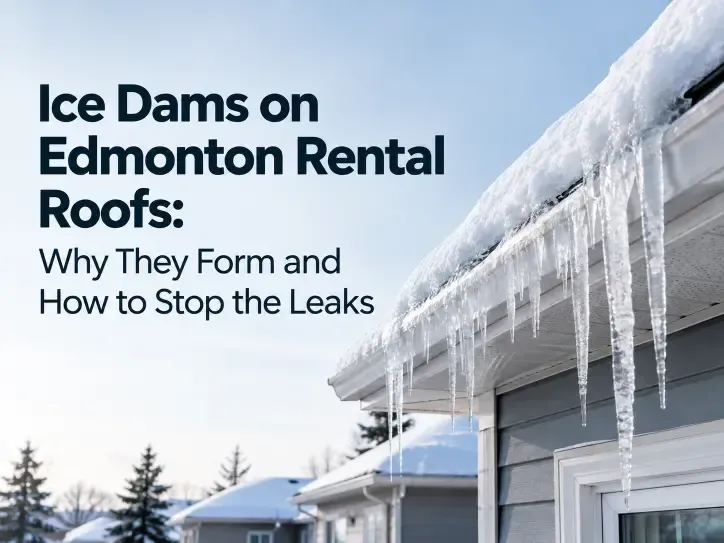
An ice dam is a ridge of ice that builds along the eaves and traps meltwater on the roof. That water has nowhere to go but under the shingles and into the attic, walls and ceilings below. For a landlord, it often shows up first as a tenant's photo of a brown ceiling stain in January.
Edmonton's freeze-thaw swings make ice dams a regular winter problem, not a rare one. The good news is that they're mostly preventable, and the damage is mostly avoidable if you act early. This guide covers why they form, what they damage, how to remove them safely, and where insurance stands.
Key takeaways
• Ice dams form when a warm attic melts snow from below and the water refreezes at the cold eaves.
• Water damage is the biggest risk, followed by damaged eavestroughs, soffits, shingles and falling ice.
• Never chip ice dams with shovels, axes or hatchets. It wrecks shingles.
• Insurance coverage varies. The Insurance Bureau of Canada says many policies cover sudden water damage, but basic policies may not.
How do ice dams form on Edmonton roofs?
Heat escaping from the living space warms the attic and the roof deck above it. That warmth melts the bottom layer of snow, and the water runs down the roof until it reaches the eaves. The eaves hang out past the heated part of the house, so they stay at outdoor temperature, and the water refreezes there.
Alberta broker Acera describes this as a byproduct of Alberta's freeze-thaw cycle, and it repeats every warm spell. Each round adds another layer of ice. Eventually the ridge is tall enough to hold a pool of water behind it, and the leak starts.
Older rental homes and walk-ups are the most common victims. Thin attic insulation, leaky ceiling penetrations and blocked soffit vents all push more heat into the roof.
What damage can ice dams cause?
The Insurance Bureau of Canada (IBC) calls water damage the greatest threat from an ice dam, with damaged eavestroughs, soffits, shingles and downspouts also common. Inside, trapped water soaks attic insulation, stains ceilings, runs down wall cavities and swells window trim.
The damage you can't see is the expensive part. Wet insulation stops insulating, which melts more snow and makes the dam worse. Wet drywall and framing that don't dry properly become a mould problem by spring.
There's also a safety issue outside. Acera warns that ice dams can break off and fall, injuring anyone below. Heavy icicles over an entrance or a walkway are a liability risk for any landlord, the same way an icy sidewalk is.
Does insurance cover ice dam damage in Alberta?
It depends on the policy, and sources don't fully agree. IBC says standard homeowner policies commonly cover sudden and accidental water damage caused by ice dams, but that policies vary and basic policies might not. Acera, an Alberta broker, goes further and says ice dam damage is generally not covered, because insurers see it as preventable through maintenance.
Here's how we read that for landlords. Interior damage from a sudden leak may be covered, depending on your policy and endorsements. The ice removal and roof repair usually aren't. And landlord or rental property policies are written differently from homeowner policies, so don't assume one matches the other.
Two practical steps protect you either way. Call your broker now, before winter, and ask specifically about ice dams and water damage endorsements on each rental. Then keep records of your roof and attic maintenance, because "preventable" is the argument you want to be able to answer.
How should ice dams be removed safely?
Carefully, and usually not by a tenant on a ladder. Alberta broker Acera and the consumer group United Policyholders both warn against using shovels, axes or a blowtorch to chip or melt the ice. Hatchets and ice picks fall in the same category. Each one damages shingles and can turn a small leak into a roof replacement.
Safer approaches include:
Steam: low-pressure steam cuts channels through the ice without tearing shingles. This is the standard professional method.
Calcium chloride: Acera recommends calcium chloride ice melter to open a drainage path. Avoid rock salt on roofs.
Roof raking from the ground: pulling snow off the lower few feet of roof reduces the meltwater feeding the dam.
If you hire it out, ask how the crew removes the ice before they climb up. The answer should be steam or careful hand work that stops short of the shingles. Ask for proof of liability insurance and a WCB Alberta clearance letter too, because a fall on your roof can become your problem.
Spartan Enhanced handles roof snow clearing and ice dam removal as part of our snow removal services in Edmonton, dispatched through the same network that clears sidewalks and lots across the Capital Region. Every visit is logged with photos in the Spartan App.
How do you prevent ice dams long term?
Removal treats the symptom. Prevention means keeping the roof deck cold so snow doesn't melt from below. The most effective fixes, roughly in order of impact:
Air seal the attic floor around light fixtures, bath fans, plumbing stacks and the attic hatch.
Add attic insulation to cut heat loss into the roof space.
Clear soffit vents so cold air can move under the roof deck.
Make sure bathroom and kitchen fans vent outside, not into the attic.
Clean eavestroughs and downspouts in fall so meltwater can drain.
On problem roofs, consider heat cables along the eaves, and an ice and water shield membrane at the next reroof.
Most of this work belongs in your autumn routine, before the first big snowfall. Our fall property maintenance checklist for Edmonton landlords covers eavestroughs, attic insulation and roof checks in one list.
Water already coming through the ceiling?
Act in this order:
Move belongings and put down containers or tarps under the leak.
If the ceiling is bulging with water, keep people away from it.
Photograph everything, inside and on the roof, before cleanup starts.
Call your insurance broker to open a claim.
Get the ice dam opened so water stops feeding the leak.
Start drying right away. Wet insulation and drywall left for days is where mould starts.
Frequently asked questions
Should I remove snow from my roof in Edmonton?
You don't need to clear every roof every storm. But raking the lower few feet of snow after heavy snowfall cuts the meltwater that feeds ice dams. If you already see thick icicles or ice along the eaves, have it cleared safely before the next warm spell.
Does home insurance cover ice dam damage in Alberta?
Sometimes. The Insurance Bureau of Canada says many standard policies cover sudden and accidental water damage from ice dams, but basic policies may not. Ice removal and roof repairs are usually excluded. Rental property policies differ, so confirm coverage for each property with your broker.
Can I use salt to melt an ice dam?
Avoid rock salt on a roof. Alberta broker Acera recommends calcium chloride ice melter instead. Never chip at the ice with a shovel, axe or hatchet, since that damages shingles and can make leaks worse.
Are heat cables worth it for ice dams?
They help on roofs that dam in the same spot every winter, especially low-slope eaves and valleys. But heat cables treat the symptom. Air sealing and attic insulation fix the cause, so do those first and use cables where problems keep coming back.
Seeing icicles or ceiling stains already?
Call us before it reaches the ceiling. We dispatch 24/7 during storms. Call 780-935-9243 or email [email protected].
Sources
Insurance Bureau of Canada, Stay protected: Understanding and helping prevent ice dams, retrieved 2026-10-06, https://www.ibc.ca/news-insights/in-focus/stay-protected-understanding-and-helping-prevent-ice-dams
Acera Insurance, How to prevent ice damming on your home, retrieved 2026-10-06, https://acera.ca/how-to-prevent-ice-damming-on-your-home/
United Policyholders, Ice Dams and Insurance, retrieved 2026-10-06, https://uphelp.org/claim-guidance-publications/ice-dams-and-insurance/